Saturday, February 10, 2317

    The Torture Castle - 1893


    March 27th, 1893
    K. Shaw
    World's Fair Hotel
    Chicago, Illinois


    This is my fifth jump to the World's Fair Hotel, and I am growing tired of landing in this miserable closet.  It is tiny and dark, and it reeks of chemicals.  In a few months, as the body count rises, it will reek of something far worse.  Inconveniences aside, this horrid little hole provides excellent access to the site of one of the most horrific and mysterious murder sprees in American history. Hopefully after today I can move on to something a bit less gruesome.


    World's Fair Hotel
    The World's Fair Hotel, at 701 Sixty-Third Street, looks much the same as any of the other hotels that were hastily constructed or remodeled during the past few months by enterprising businessmen eager to cash in on the millions of tourists that will soon pour into Chicago for the 1893 Columbian Exposition. The lower floor of this building, which neighbors have dubbed The Castle, is taken up by several small businesses, including a restaurant and a pharmacy owned by Dr. H. H. Holmes, who designed the building himself.


    Those familiar with the history of Chicago will no doubt recognize the name, as H.H. Holmes ranks among the most notorious serial killers in American history.  No one is quite sure how many lives Holmes ended.  A modest appraisal would put the total around fifty, but the remains that police will discover throughout the hotel  when the case breaks in 1895 are so numerous and so unidentifiable that others estimate the body count as closer to 200.  

    Although he committed several murders elsewhere, the Chicago killings accounted for the vast majority of Holmes's victims.  Most seem to have disappeared from his hotel during the six months of the World's Fair, but several women who were known or suspected to have had romantic relationships with Holmes in 1891 and 1892 were found among the bodies, so it's almost certain that there are several bodies in the building now. Chambermaids, janitors and even a few guests have commented on the pervasive smell of decay on this side of the second floor.  


    The structure of the hotel plays a central role in the mystery surrounding Holmes, with many hidden rooms designed solely for killing, an asphyxiation chamber, and a basement outfitted with a lime-pit and a small crematorium for disposing of bodies. (Holmes has also been known to raise a little extra cash by selling fully-articulated skeletons to local medical schools.) The foul little closet I arrived in (marked on the map below by a red arrow) was set as a stable point to allow CHRONOS researchers to get in and out with minimal risk of discovery, especially when dressed as I am, in full 1890s chambermaid regalia.  With a cloth and bucket in hand to provide cover, I open the closet door and step into the "Five Door Room."  

    Holmes targets women
    Map of the Castle - 2nd Floor
    and the hotel has provided him an unparalleled opportunity to lure victims who might not be missed for several months. 
    Transient laborers often disappear, and by the end of 1893, the Chicago police will have lists of several hundred missing persons. A severely depressed economy has flooded the city with thousands of job-seekers, many of them female, since Chicago, with the upcoming Exposition, is one of the few places in the country where work can still be found.  

    At least some members of the Chicago police force will soon become aware of the odd design of Holmes's building, due to ongoing complaints by several local companies.  Holmes furnished this building on credit, and having failed to make the agreed-upon payments, his creditors are trying to repossess the numerous beds and other items of furniture that Holmes has acquired.  Agents hired by the company and the sheriff's office have all failed to locate the goods.  

    Despite several charges pending against him, police seem inclined to give Holmes the benefit of the doubt.  This could be attributable in part to his renowned charisma, but I suspect it is due more to the fact that the policemen in this part of town are always treated to free coffee and food in Holmes's restaurant.  The complaints against him have, however, reached a crescendo and an investigation is now unavoidable.  One of the largest creditors, the Tobey Company, bribed an employee who was angry at Holmes for failing to pay wages and the worker revealed that some of the missing furniture is stashed in one of many secret rooms scattered throughout the building.   

    After a few minutes on my knees pretending to clean the baseboards, I heard footsteps in the hallway.  Holmes and four other men entered the room.  Two were in police uniforms, looking a bit uncomfortable.  I recognized them from my previous jumps as frequent patrons of the restaurant downstairs.

    The younger, thinner cop wrinkled his nose as entered, sniffing a few times as he glanced around the room.  He leaned down toward me and whispered, "Don't want to get you in bad with your boss, Miss, but I think you have a dead mouse somewhere in here."

    I glanced up.  He had earnest gray eyes and looked to be in his early twenties, with red hair and a smattering of freckles across his nose. I had a fleeting urge to punch a hole in the fake wall in front of me, so that he could see that the problem was far bigger than a dead mouse, but I fought it down.   

    "Yessir," I said softly. "Could be we do." 


    H. H. Holmes
    Holmes took a few steps back toward the hallway. "You are perfectly welcome to check in any of these rooms, Officers.  As you can see, this one is empty."  He pointed behind him to a room on his right.  "As is this one.  If you'll follow me through here, I can show you the second-hand furniture in my reception room, but it certainly doesn't meet the description these gentlemen have given you.  It belonged to my mother-in-law. My partner has assured me that he delivered payment in advance, per my instructions, for our purchases from your company, but as you can see, the merchandise was never delivered.  Now our cash is tied up in this matter and we're having a devil of a time locating suitable replacem"

    A rumbling noise emerged from the dumbwaiter behind me.  The shaft runs from the restaurant to the other floors of the building and it's larger than most conveyances of its type. This isn't surprising since it was designed for double dutyit transports dishes and food between the various floors of the hotel during the day, but Holmes also uses it after-hours to move dead bodies from this floor to the basement. 

    The body inside the dumbwaiter today was very much alive, however. He pushed open the door with one dark hand and motioned to one of the men standing near the doorway with Holmes.   "Mr. Tobey, I found it, sir.  It's just where my friend said it would be.  If you can just come over here, I'll show you."

    I kept rubbing the cloth along the baseboards, but glanced back over my shoulder as Holmes and the men moved toward the dumbwaiter.  There was another brief grinding of gears and the young black man dipped downward.  Only the top of his head was visible, and then I could no longer see even that, since the door was blocked by five men who were all attempting to peer through the elevator door.  

    Holmes was the first to speak.  "Well, I'll be damned.  Is that a room?  It's just hanging there, halfway between this floor and the next!  How on earth is something like that even constructed?"

    The older, chubbier cop shook his head.  "I have no idea, Dr. Holmes.  Never seen anything like it.  Looks like it is full of the missing mattresses and other furniture, however."

    "Gentlemen, you must believe me.  I had no idea this room was here.  I purchased this building a few years ago and one of my partnershe's currently in New Jerseyoversaw the renovations."  Holmes pushed a stray piece of hair back from his forehead and then looked in my direction.  "How long have you been with us, Miss?"  

    "It's Alice, sir," I answered, my head low and my eyes glued to the floor.  "Only two weeks.   Your wife hired"

    He waved a hand dismissively and turned back to the men.  "She wouldn't remember Campbell, then. He was in charge of the renovations.  As the officers can tell you, Mr. Tobey, I travel a great deal and my partner fills in for me while I am away.  I would never have believed him capable of this kind of treachery.  Clearly Campbell was planning to sell these goods behind my back.  He's probably pocketed the money he was entrusted with for these purchases as well." 

    Campbell is the latest in a string of fictional characters Holmes has created to hide his business transactions.  Even knowing this, however, I found myself understanding how so many people were taken in by Holmes.  His voice was filled with such conviction that I half expected Campbell to materialize out of thin air.   

    He took a few steps back, moving toward the door, and leaned against the wall for support.  I pulled in a sharp breath.  Six inches to the right and his elbow would have gone through the wallpaper and into the hidden room where police detectives will find three mangled and badly decomposed corpses.  


    Chicago Daily Tribune, March 31, 1893.
    Holmes slid downward slowly and sat, shaking his head, a few yards away from me. Tobey was the only one of the bunch who clearly doubted the story.  He gave Holmes one last look of contempt and turned his attention to his two employees, who were trying to figure out how they were going to remove the furniture that was wedged into the hidden room.  Tobey will take his case to the media, and the Chicago Daily Tribune will run an interesting investigative piece next week that pokes multiple holes in Holmes's claim about Campbell and the missing goods, but no official action will be taken.

    The older of the two policemen walked over to Holmes and offered him a hand up.  "If you can provide us with a description and his last known address, Dr. Holmes, perhaps we can help you locate your partner.  I know you'd like to get this matter cleared up as soon as possible."

    Holmes took the cop's hand and pulled himself to his feet, giving him a grateful smile.  "I most certainly would, Officer Bailey.  Matters like this can take such a dreadful toll on a man's reputation, and in my line of work, reputation is everything.  Let me get my papers and I'll meet you in the restaurant.  I understand Daisy has an excellent apple cake on the menu today..."

    The younger cop glanced back over his shoulder, his nose twitching, before following his partner and Holmes, whose voices trailed off as they headed back toward the stairs.  I dropped the cloth into the bucket and went back into the small, dark closet for the return jump to HQ.  

    I know that things must occur in their own time, and I am just here to observe, but sometimes that job is difficult to reconcile with my conscience.  The police walked right past the truth today but were too focused on missing furniture and free apple cake to pay attention. Who knows how many lives might have been saved if the younger cop had followed his nose instead of his partner?  Or if I had yielded to that brief desire and pointed him in the right direction?


    Learn more about the World's Fair Hotel and H.H. Holmes:

    Photo Credits:


    Tuesday, October 31, 2316

    Tracking the Infanta, Part 2

    June 9th, 1893
    K. Shaw
    Chicago, Illinois


    The Midway was crowded tonight. That is usually the case in the evenings, but even more so in the past week.  The temperature has run a bit above normal, making it far more pleasant to observe the Fair as the sun sets and day grows cooler.   

    The Infanta was indeed in Old Vienna tonight, seated with another woman, who I believe was the Marquesa de Arco Hermosa, her lady-in-waiting.  They both looked tired.  The princess herself was much smaller than I expected--a tiny, slender woman. She was smoking a thin cigarette and staring out at the Ferris wheel.  It is an impressive sight during the day, but even more awe-inspiring when the three thousand bulbs on the frame come to life, spinning a lazy arc of light against the evening sky.

    Eulalia's tiara and flowing gowns have been traded in, at some point during the evening, for a gray traveling dress.  I recognized her at once because I've studied the various photographs of her, but if others in the cafe suspected they were in the presence of royalty, they didn't let on.  A few people, both men and women, shook their heads in disapproval of the cigarette between her fingers, which could get the average woman arrested in many towns during the late 1890s, but no one seemed to connect the grand princess of Spain they'd been reading about in the papers with the small young woman looking out at the scenic view.
    I took a seat in one of the folding chairs in the square at Der Graben, the area of Old Vienna that is a recreation of a famous street in Austria, and waited for the right moment to approach her table.  After five minutes or so, the other woman, Marqesa de Arco, the lady-in-waiting that Eulalia mentioned in her letters and memoirs, got up and left the table.  
    A View of the Ferris Wheel from Der Graben in Old Vienna
    The princess put out her cigarette in the small plate at the edge of her table, which held the remnants of her dinner.  She arched a royal eyebrow as I approached her table, introducing myself as a local reporter and asking if she might be willing to grant me an interview.  She listened without comment until I was finished talking and then said, very simply, "No."

    My polite request having failed, it was now time to see if I could successfully play the "help a sister out" card that has worked for me on a few other occasions.  "Please reconsider, your Highness.  I need this to show my boss that I can do more than just cover garden shows and society weddings."  Her face was beginning to soften a bit, so I kept going.  "I know you've refused to speak with the male reporters, and this would be such a coup.  Maybe they'd start to treat me more like an equal."

    She looks at me for a moment, her head cocked to one side, and then nods at the empty chair.  Judging from her expression, she's doing this against her better judgment.

    "Thank you so much. Is your friend coming back? I can pull up another chair--"

    "She's off looking for the gentlemen in our party so that we can return to the hotel.  I know where Antonio is--he likes to watch the dancers.  But it may still take her awhile to find him."

    I sank down into the chair and said, "I'll make it as quick as possible.  It should only take a few minutes of your time."

    "Very well.  Would you care to join me in a smoke?"  Her voice was soft, with just a touch of an accent.

    I'm not a fan of cigarettes, but I sensed that she was testing me, so I agreed.  She pulled an elaborate cigarette case out of her pocket--gold and silver, with jade teardrop shapes on each corner and small turquoise flowers between. I took a cigarette, along with a match, which I struck against the edge of the table. When I glanced up, Eulalia was leaning forward, a new cigarette in her mouth, waiting for me to light it.  

    I managed to get both of them lit before the match burned out and pulled in a careful draw from my cigarette.  Eulalia watched my face with a hint of amusement, probably suspecting that I'd start coughing.  I avoided it, but it was close call.   
    1893 World's Fair Commemerative Cigarette Case

    She flipped the cigarette case closed and held it over the table for my inspection.  "It's pretty, is it not? But something is puzzling to me. Maybe as an American, you can explain it. I purchased this case here at the Exposition. It is clearly designed for a woman.  Yet everytime I decide to smoke in this country, I am judged harshly.  No one will say anything to me directly of course--one of the privileges of being a royal visitor is that they expect a few eccentricities--but I am confused about a nation that would create such a case and then pass laws that would deny woman the right to use it."

    I smiled at her and shrugged.  "Women are definitely held to a different standard.  Is it the same when you're in Spain?"

    Eulalia rolled her eyes.  "Yes, and most especially when I'm at court, where my every move is watched.  That is why I avoid it, when possible.  Although the current regent seems to rank smoking rather far down the list of my trangressions, perhaps because I'm less likely to say something shocking if my mouth is otherwise occupied."

    "So, they prefer you to keep quiet and submissive?  Your mother was once the queen, your sister-in-law is now regent.  It seems odd that a country that allows women to hold such authority would expect you not to have opinions."

    A sly smile spread across her face.  "It is not that they expect me to have no opinions, but rather that they do not care for the specific opinions I hold.  And I think my marriage to Antonio was intended in part to tame me, so they're naturally disappointed that the scheme didn't work."

    "What are these scandalous opinions?" I asked.

    Her eyes grew guarded.  "I can't answer that.  Do you have children, Miss..."

    "Shaw.  But you can call me Katherine.  And no, I don't."

    "Children are a great joy, but as Francis Bacon once noted, they provide hostages to fortune.  I have two young sons and must, therefore, at least make a show of following the royal dictates until my childrens' futures are settled." 

    "I understand," I said.  "But what if I agreed not to print that part?  I'm curious about this on a personal level, since you are one of the few feminists I have had the pleasure to interview."

    Her face lit up at the mention of feminism, which answered one of my research questions.  In 1912, after her children are grown, Eulalia will write a book called The Thread of Life, with a chapter entitled "The War upon Feminism," but the seeds of her ideas on women's rights seem to have been planted earlier.

    She leaned forward, conspiratorial.  "I'll agree, as long a I have your word that it goes no
    Eulalia and Antonio
    further than this table."  


    I nodded and she continued in a lower voice.  "The matter of divorce is one thing I would dearly love to see changed.  Antonio and I are ill-matched and would happily be rid of each other.  He is a..." She paused for a moment, looking for the right word.  "A dullard. A dullard who tends toward every known vice.  We live apart now.  I've spent more time with the man in the past month than in the three previous years and we're no closer to being good companions than we were before the children arrived.  Antonio can, of course, cavort openly with other women--it's viewed as entirely acceptable for a man.  As a woman, however, I have no such freedom."

    She paused to take a puff and then blew out a long stream of smoke.  "True equality of education for women, political equality for women--I've learned to keep my opinions on those issues largely to myself, for the time being.  And then there is the most dangerous idea of all, equalizing the social classes and ensuring full education for everyone.  A shift in the relations between the worker and upper class is coming, whether those of us with privilege want it or not." 

    "Do you think that shift is only likely in Spain?" I asked.  

    "Dios mรญo! I would hope not.  Even here in this city that prides itself on democratic views, you have royalty who claim special privilege and offer little in return."

    I smiled and tap the ash off my cigarette, then take another cautious draw.  "Is that a reference to Mrs. Palmer?  I understand she's used to getting her way."

    "That is clearly true," says Eulalia, "but so am I. If I attended every function they had on their agenda, I would never have had any time to enjoy the Exposition.  The best time I've had so far was the day we toured with your Mayor Harrison.  He is a very charming and witty man, and unlike Mrs. Palmer and the rest of her society, the Mayor let me see the Fair in my own way.  He looked so uncomfortable at the Palmers' party tonight--someone put the poor man in a silk top-hat, and he seems so much more at ease in his normal attire.  I hope he escaped early as well."

    Eulalia's "off-the-record" remarks having answered most of my research questions, I moved on to a few innocuous questions about her time in Chicago--which exhibit she enjoyed most, whether she'd seen Buffalo Bill's Wild West Show just outside the fairgrounds, and if she'd had the chance to ride the Ferris wheel.  She had just finished telling me about her ride on the wheel and in the tethered balloon when the Marquesa approached and tapped the princess on the shoulder, leaning in to whisper something in her ear.

    The Infanta sighed and gave me a pained smile.  "She has located our gentlemen, exactly where I said they would be--watching Little Egypt over on Cairo Street.  So I must take my leave."  She took several deep puffs from the cigarette and then snuffed it out in the plate.  "Go write your story and enjoy your freedom, Katherine."


    Learn more about the 1893 Columbian Exposition and the Infanta Eulalia:


    Monday, September 11, 2316

    Tracking the Infanta - 1893 (Part 1)

    June 9th, 1893
    K. Shaw
    Chicago, Illinois


    Infanta Eulalia of Spain
    The Chicago newspapers have been abuzz for weeks now about the upcoming visit of the Infanta Eulalia of Spain.  The World's Columbian Exposition is, after all, intended in part as a celebration of the arrival of Columbus on this continent and Eulalia is an indirect descendant of the woman believed to have funded that journey, Queen Isabella I.  

    The title of Infanta is given to all Spanish princesses. Her full name is Maria Eulalia Francisca de Asis Margarita Roberta Isabel Francisca de Paula Cristina Maria de la Piedad, and at twenty-nine years of age, she is the youngest member of the Spanish Monarchy.  Eulalia and her husband,  Antonio de Orleans y Borbรณn, were received at the White House late last month, along with other members of the official Spanish delegation, including a descendent of Christopher Columbus.

    Chicago society was eager to prove itself equal to the challenge of hosting royalty, so Eulalia discovered, upon her arrival in the city, that she had a full itinerary of dinners and luncheons in her honor straight through until her planned date of departure.  Press accounts concerning the Infanta were glowing for the first few days, although readers of the Tribune were a bit suprised to learn her Highness is a smoker. Stories hailed her as beautiful, gracious, and even democratic, noting that she was willing to dispense with the typical trappings of royalty and preferred a simple handshake to a curtsy or a bow.  

    Some of her hosts and hostesses have now, however, dubbed Eulalia the Infanta Terrible.
    After several full days of official duties, Eulalia has decided that enough is enough.  She toured the Exposition yesterday with Chicago mayor, Carter Henry Harrison, but this seems to have simply whetted her appetite for more Fair and fewer formal engagements. With only a few days left before their planned departure, both she and Prince Antonio seem determined to enjoy what the Exposition has to offer. (They aren't especially inclined to tour the Exposition together, however.)  Earlier today, Eulalia decided to dine informally at the German Village on the Midway Plaisance rather than attend a formal luncheon being planned by the Committee on Ceremonies and if the official histories are correct, she will do so again tomorrow.  Apparently, she prefers frankfurters over fois gras.  


    Residence of Mr. and Mrs. Potter Palmer, aka Potter Castle
    Tonight, the Infanta was supposed to spend the entire evening at the home of Potter Palmer, but she put in a brief, perfunctory appearance and announced that she was leaving to walk around the Fair. And so, I am here at the Midway Plaisance this evening, disguised as a reporter, in hopes that she may be more willing to speak with a woman journalist than she has been to speak with the male reporters who have dogged her every step. I know from my research that she will later be a staunch proponent of women's rights, but I'm curious to learn whether she has already arrived at this sentiment or if it is something that will develop in the coming years.   I have left the Kodak camera behind, however, as I'm concerned that she may object to being photographed.  

    I'm also eager to get the scoop on tonight's dinner at the Palmer residence.  Because, whether it was intentional or not, the Infanta has apparently offended the unofficial First Lady of Chicago, Bertha Honorรฉ Palmer, who also happens to be next on my research agenda.  Mrs. Palmer, the President of the Board of Lady Managers for the Exposition, is the reigning queen of Chicago society and the city's legend holds that the Infanta complained that she was expected to suffer the indignity of being entertained by an "innkeeper's wife."  There's no official record of that slur, however, and the Infanta toured the Exposition's Woman's Building with Mrs. Palmer earlier in the week, so I'm hoping to get the real story behind the rumors.

    Learn more about the 1893 Columbian Exposition and the Infanta Eulalia:

    Photo Credits:


    Monday, July 17, 2316

    Dedication Day - 1892

    K. Shaw
    October 21, 1892
    Chicago, Illinois

    Official "Dedication Day" for the World's Columbian Exposition.  The fair itself will not open for another six months, but dignitaries are gathering today for the ceremony where Chicago formally transfers "ownership" of the Expo to the U.S. government. The parade route is so crowded that I can barely move, let alone get close to the front to see anything, especially with this gargantuan camera around my neck. Those ads with Kodak Girls don't tell you that these things are heavy and bulky.I'm beginning to suspect that the nickname "Kodak fiend" that photographers will be given at this fair is due less to people not wanting their pictures taken and more to their annoyance at being jabbed in the back with a camera case when mashed together in a queue with hundreds of other tourists viewing an exhibit. I do understand that the goal is for me to get the full experience of being here, but it would be so much easier to document these jumps if they'd let me use a holovid. 


    But this trip has been worth it if only to see the excitement of the spectators as the parade passed. The economy is very weak right now and the jobs created by the Exposition, both in construction and service, are badly needed. The city lobbied hard to host the fair and they have turned out by the thousands to show their support along the seven-mile parade route.


    Along the parade route, near the Midway Plaisance
    The young men perched on this pole have the best seat on the entire route, although it sways a bit every time we get a half-decent wind gust from Lake Michigan.  They make me very nervous, especially the little guy at the top, but no one here even glances their way.  This shouldn't be too surprising in an era when kids their age are allowed to work in factories with no sort of safety laws, but I have to fight the temptation to warn them that what they're doing isn't safe--although I doubt they'd listen to me.  I don't remember reading anything about a kid falling to his death along the parade route in the newspaper accounts I read about this day, but would that kind of thing even have been reported?  Probably not.


    Manufactures and Liberal Arts Building in September 1892.
    I'm amazed at how much work remains to be done in such a short time. Construction began over a year ago, and only a few of the buildings are up.  And even those are a far cry from the finished product that I'm used to seeing on these trips once the Exposition opens its gates to the world.  One building that is close to its final state,however, is the Manufactures and Liberal Arts Building, where the ceremonies are being held after the parade.  They've made tremendous progress in the month since I was last here, when the rotunda was still mostly a metal framework.  

    So, why dedicate the Expo in October when it is so far from finished and the gates will not open to the public until next May?  This month marks the 400th anniversary of Columbus's discovery of the New World, and the original hope had been for the fair to open in time to commemorate that event. The political wrangling over which city would actually be home to the Expo, however, went on for months before Chicago garnered enough votes to beat out the other contenders--New York, St. Louis and Washington DC--and that put everything behind schedule.  Then the politicians in Chicago fought for another six months to determine which sector of the city would get the privilege of housing the Expo and thus enjoy the lion's share of the economic boom.  And once the site was chosen, the fact that it was little more than a swamp didn't help matters.  The ground is still pretty damp if you step away from the main path--I nearly lost a shoe in the muck while walking around today.

    PM


    Crowd at Dedication Ceremony, October 21, 1892
    I am now in the middle of the largest audience ever assembled under a single roof--at least as of 1892--and I'm questioning why I thought this trip was a good idea.  The dedication ceremony is packed, with an estimated 140,000 people jammed into this single building, which will eventually  

    Crowds of this size will not be unusual for the Expo--over 700,000 people will be on the grounds for Chicago Day, nearly a year from now, on October 9, 1893.   But they will be spread across the full 630 acres and hundreds of exhibits. 

    I'll need to schedule another jump and skip the parade.  If I come directly here, I may actually be able to hear the speeches. but here in the middle of the crowd, I haven't been able to make out a word anyone has said.  We're still more than a decade away from loudspeakers and this building obviously wasn't designed with acoustics in mind.  No matter how skilled the orator, no single voice could hope to carry far in this crowd. The music, including a 5000 voice choir is at the back of the building, so it's coming through loud and clear, but if any bits of oration are carrying this far back, they are drowned out by the woman near me who is intent on conversing with her hearing-impaired neighbor. If CHRONOS expects me to report back on the actual ceremony, I will need credentials next time, so that I'm placed near the front and have a seat.  

    Learn more about the Chicago World's Fair:

    Photo Credits:


    Tuesday, March 21, 2316

    We Are All Starving Together - 1907

    November 3, 1907

    S. Wrenn
    Interview with Harriet Scott Palmer
    Lake Grove, Oswego, Oregon

    Harriet Scott Palmer is more than seventy years old, but her voice is clear and unwavering.  This is the fourth of seven trips I'm scheduled to make this month to Oregon, where the women's suffrage movement is poised for a long-sought victory later this year.  Harriet's older sister, Abigail Scott Duniway, is at the forefront of that campaign, but Harriet tends to stay out of the limelight, possibly because of a rumored divorce in her past.  The historical records are unclear on exactly when this divorce occurred.  At some point between 1880 she ceased to be Mrs. William McCord and became Mrs. Isaac Palmer. But I don't ask--this is an era where the stigma of divorce is still strong, even in western states like Oregon where the social mores aren't quite as rigid as they are on the East Coast.

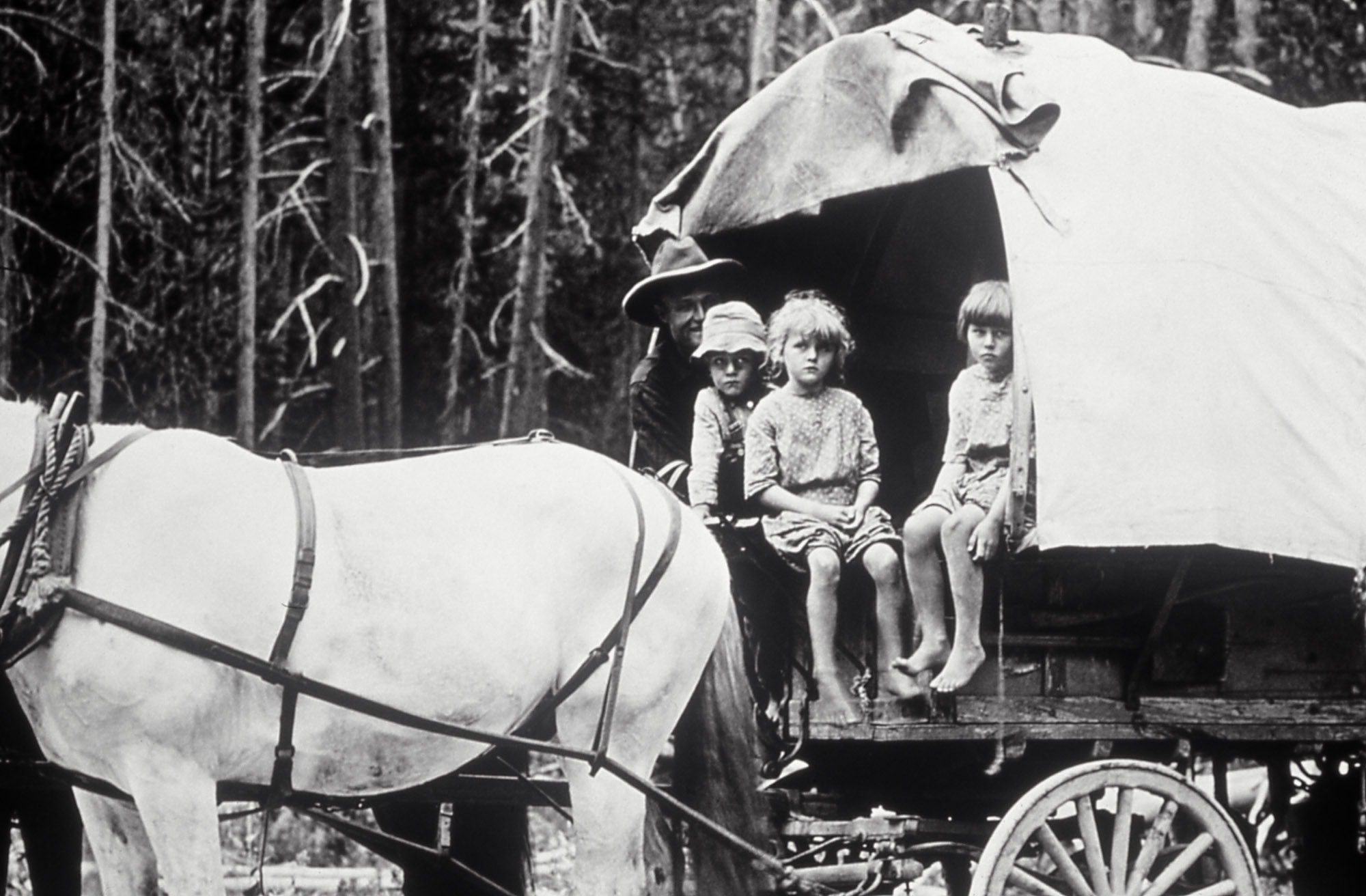
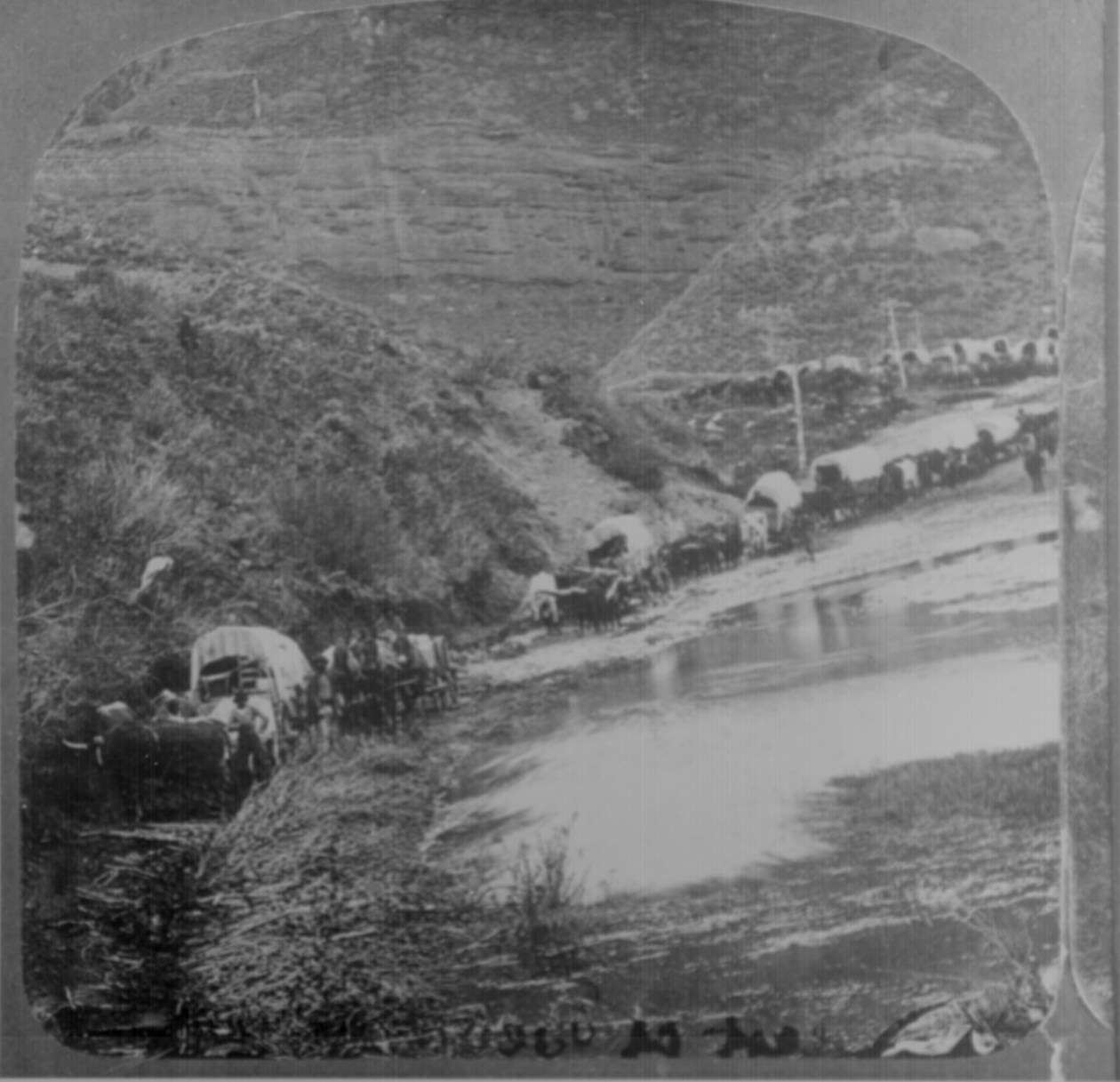
    Harriet takes a sip from her cup of tea and then begins to tell me about her trip along the Oregon Trail. "Altho I was but a girl of 11 years I distinctly remember many things connected with that far-off time when all of our western country was a wilderness... We were six months in crossing the plains in ox-wagons.


    "In our home, in Illinois, in the early fifties, there was much talk and excitement over the news of the great gold discoveries in California -- and equally there was much talk concerning the wonderful fertile valleys of Oregon Territory -- an act of Congress giving to actual settlers 640 acres of land.


    "My father, John Tucker Scott, with much of the pioneer spirit in his blood, became so interested that he decided to "Go West"....The spring of 1852 ushered in so many preparations, great work of all kinds. I remember relations coming to help sew, of tearful partings, little gifts of remembrances exchanged, the sale of the farm, the buying and breaking in of unruly oxen, the loud voices of the men, and the general confusion.


    "The first of April came -- 1852. The long line of covered wagons, so clean and white, but oh so battered, torn and dirty afterward: The loud callings and hilarity: many came to see us off. We took a last look at our dear homestead as it faded from our view. We crossed the Illinois River on a ferry. 


    We looked back and saw our old watch dog (his name was Watch) howling on the distant shore. Father had driven him back, saying, 'Go back to Grandfather, Watch!' But he never ate afterwards, and soon died. 

    "We stopped at St, Joseph, Missouri, to get more provisions. We had never before seen Negroes, and all along this state we saw many negro huts, and went into one to see some little negro babies. My remembrance of the state was muddy roads, muddy water and a sort of general poverty.


    "When we crossed into Nebraska, it seemed such a wide stretch of plain. We got our first sight of Indians -- a file of Indians were passing along, single file. They were the Pottowattamies, dressed in buckskins, beads, and leading their ponies. An open country was now before us. The melting snows had made the streams high, the roads nearly impassable. The Platte river, swift and swollen, didn't seem to have any banks. We had heard of the danger of quicksands. My father had, with the help of his drivers, raised the beds of his wagons, so as not to dip water ... When everything was in readiness all of us were tucked inside of the wagons. My father put me, last of all, inside the back end of the last wagon, told me to keep still and not be afraid. The loud voices of the drivers as they yelled and whipped up the oxen, the jogging of the wagons through the surging waters and over the quicksands, the memory is with me yet. When they got over the river, all were accounted for, but they couldn't find me. Finally I was pulled out from under the bows, nearly smothered. There were nine of us children, ranging from four years to my eldest sister, who was about nineteen."

    "That would be your sister Abigail?" I asked.


    She nodded and continued. "My mother kept the two youngest with her always in 'Mother's wagon'. Her health was not very good, and she had dreads and fears, but hoped she would live to get to Oregon. Fate willed it otherwise, and being frail and weary with the long journey, she fell a victim to the cholera, so prevalent that year on the plains, leaving her sorrowing family to grieve for her. When we reached Wyoming, there in the Black Hills, this side of Ft. Laramie, the passing of that dear, beloved mother was a crushing blow to all our hopes. We had to journey on, and leave her in a lonely grave -- a feather bed as a coffin, and the grave protected from the wolves by stones heaped upon it. The rolling hills were ablaze with beautiful wild roses -- it was the 20th of June, and we heaped and covered mother's grave with the roses so the cruel stones were hid from view. Her grave is lost. No one was ever able to find it again.

    "The old emigrant trail hold many hard experiences. Coming to the Snake River and for many miles along, it was impossible to reach it to get water for the oxen. We had to travel all night at times. On one occasion... the camp was made after dark, and there was such a stench in the air. Early daylight found us camped close between two dead oxen, on one side, and a dead horse on the other -- so we had to move before breakfast.

    "About two miles above the great American Falls we were able to get the cattle down to drink. It so happened that after the yokes of the oxen were removed and the oxen driven into the water, an old headstrong bull plunged into the river and swam across, the rest of the cattle following, except two cows that our man were able to keep back. Our company was in great peril.

    "My father, generally equal to any emergency, decided that any one or more of the men who were good swimmers, should go above our camp, swim over and drive the cattle back. This was attempted by two young men, one of whom swum over first, on one of our mares; the other was drowned, and as we with agonized eyes watched the stream we saw the white face of our old mare "Sukey" bobbing up and down in the boiling waters. She was such a loved old mare that we could not bear to leave her at home in Illinois. A third man tried and got safely over. We could see his naked form over the river among the hot burning rooks. It was impossible for him alone to drive the cattle back. My father made a mighty effort to get across. Then he ordered the calking of one of the wagon beds to make a boat, and in this, three more paddled over and took some clothing to cover the poor sunburnt men on the rooks -- he was over there in that awful predicament for three days; his skin all peeled off, and he nearly lost his mind from his awful experience. They got the cattle safely over the river again, but the two cows that stayed behind ate of something poisonous and died during the night.

    "On and on we journeyed -- averaging 15 miles a day over cactus, sagebrush, hot sand. Everybody's shoes gave out and we bartered with Indians for moccasins, but that didn't help much about the prickly pears. One by one the oxen fell by the way. We came to Burnt River -- a most desolate country. Here our baby brother Willie fell sick. It was in the heat of August. The train was halted, that the darling child of 4 years could be better cared for, but he became unconscious and passed away. The soil here was thin and full of rocks. My poor father, broken-hearted, had the men cut a cavity out of the solid rock jutting out of Burnt River Mountain, and here the little form was sealed beside where the only living thing was --- a little juniper tree. My brother Harvey found it, twenty years later, and he peeled some of the bark off of the juniper tree and brought it back to my father. My father had carved Willie's name on the tree.

    "August passed. We were nearing the Cascade Mountains. The oxen were worn out, and the wagons were in poor condition to cross' the mountains. Some wagons had to be left; some of the oxen were poisoned eating mountain laurel. Our provisions were exhausted by this time, and for three days we had only salal berries and some soup made by thickening water, from flour shaken from a remaining flour sack, My uncle Levi Coffee, who was a great joker, looked at the poor mess and said to his wife, 'Why Ellen, ain't there a little bread or something.' 'Oh no,' she said, "we are all starving together.' 

    "It so happened a man overtook us on horseback, and father bought some of the flour he had in a sack behind his saddle. He paid $1.00 a pound. It proved to be bitter with mildew and unfit to eat. My sister, having charge of the two smaller children, and my aunt, whose youngest was seven, saved and hid in their pockets same biscuits they from time to time, doled out to the three littlest children.
    We came to the old Barlow Road, and a station called Barlow's Gate, in the Cascade Mountains, where we found provisions, and actually some fruit -- apples and peaches and plenty of bread. It was not long now till we reached the valley settlements and found relatives who had came the year before.

    "Before we reached Oregon City, my father was fortunate enough to buy two pounds of butter. The hungry crowd was so great that before we smaller ones had our turn at the improvised table, the butter had all been eaten up. There were six of us smaller children who did not get a taste of butter, and the thought of that rankled in us for years.

    "It was my duty to keep up the loose stock in crossing the plains, and I was given charge of an old sorrel mare who had one eye. Her name was Shuttleback on account of the shape of her back. One day we had traveled long in the heat and both Shuttleback and I needed water. I was about a mile behind the train, and off at the side of the road a grove of willows was growing. It looked like water might be there. There was, a little tributary of the Snake River, so I gladly got off the saddle that had no horn on it, and first let the mare drink. It was a steep place. The mare began to plunge and I soon saw she was in quicksand. I held on tightly to her rein, yelled with all my might, knowing there was a man behind me also driving stock. He heard me and rushed to my assistance, telling me to hold on, and not be afraid, he would bring help. He rushed ahead and brought back my father and three other man, and with ropes and a long pole pried her out of the quicksand and floated her down the stream where she finally landed on her feet. I fully expected punishment, but my father just picked me up, sat me down on the wet, muddy saddle, slapped the mare and said, 'Now, go on!'

    "Then we reached Laurel Hill, in the Cascade mountains. Oh that steep road! I know it was fully a mile long. We had to chain the wagon wheels and slide the wagons
    down the rutty, rocky road. My Aunt Martha lost one of her remaining shoes, it rolled down the mountainside. I can hear her now as she called out in her despair, 'Oh, me shoe, me shoe!" How can I ever get along?' So she wore one shoe and one moccasin the rest of the journey.


    "When we came to Ft. Walla Walla, we saw a crowing rooster on a rail fence. Oh, how we all cried... There we stood, a travel-worn, weary, heart and homesick group, crying over a rooster crowing."


    Adapted from:

    Learn more about the Oregon Trail:

    Photo Credits: