This submission is one in a series of "undercover" assignments by CHRONOS historians posing as interviewers for the Federal Writer's Project during the Great Depression.
January 20, 1939
R. Jefferson
Interview with Professor W. L. Harris
Macon, Georgia
A few weeks ago, a girl named Winsted Arnett disappeared from her home, here in Macon, Georgia. She left the house, apparently in her right mind, to keep an appointment at a certain hour. But she failed to keep the appointment; no one saw her through the day and by nightfall, her mother was
 frantic. Days passed with no news from the missing girl. The newspapers printed pictures and wrote descriptions, hoping that some clue would be given to aid in the search for her. The town is buzzing with gossip. Phone calls to various parts of the country were made, detectives employed and the FBI was even brought in, all to no avail.
Shortly before her disappearance, the girl had attempted suicide. Her mother, fearing that a second attempt had been successful, decided to consult the town's clairvoyant, "Professor" Harris, who has been consulted by many people in the town. He told her that her daughter was alive, in a mountainous part of the country and greatly worried. The number 10 was part of his vision and he predicted that the mother would hear from her daughter in either ten days or ten weeks.
The days passed with no message. On the tenth day, Prof. Harris telephoned the mother to ask if she had heard from Winifred. When she said no, he told her to stop worrying. "You'll hear from her before the day has passed. I've seen her again; she's alright and will come home or phone you before the day is gone."
That night, the phone rang in Mrs. Arnett's home and it was Winsted on the line. She was in the mountains near Asheville, North Carolina.

As the story made the rounds of town gossip, I decided that it might be worthwhile to pay the "professor" a visit. I found him living just off the highway, a short distance from the city limits, where lives with his wife and small son. He is a small, very thin man, and except for his piercing gray eyes, very insignificant in appearance. His sandy hair is kept neatly brushed, his irregular teeth protrude and his unusually large ears stand out almost vertically from the sides of his face.
"Lady, I've had a funny life," he began. "Well, not funny, exactly, just not like other folks." He paused for a moment, his eyes gazing into space, then crossed his legs, lit a cigarette, and began speaking in a very tense, rapid voice. "I'll tell you about my life. I don't care if you write me up. I hope you will, because people should know about me so that I can give more service to mankind."
"I'm just an ignorant, uneducated man. I never studied except a little about reading the stars. My power is a give from God on high. My people are Swedes, my father and mother come over to this country from Swedeland and settled in Alabama. My father's grandmother came with him. She was a reader, you understand -- could read other people's minds -- but she wouldn't read for just anybody. She would only read for people she liked. Her name was Betsy. She lived to the age of 120. She died on April 7, 1907 in our house, and on June 7, 1907, I was born. Her years on this earth were finished, but her work was unfinished. My body is not hers, it's mine, but my spirit and power are hers, and though I'm a man, I think of myself as Betsy. Her power was given to me and her work in this world goes on through her great-grandson."
"At the age of ten, in the month of March at ten o'clock in the morning, I looked at an enlarged picture of my grandmother. It was over the mantel in the parlor. I had never seen my grandmother because she did not come to America with my mother and father. I looked at her picture and said: 'Grandma's coming here today; she's coming at twelve o'clock.'
"Ma said, 'Hush, sonny. Don't say things like that. Your grandmother will never come here. She's way across the ocean.'
"But that day at twelve o'clock, a buggy stopped in front of our house and my grandmother got out. Well it surely scared everybody. They thought I was going to die."
"My father was a revenue officer. At the age of eleven, I went to him one morning at the breakfast table and said, 'Pa, please don't go downtown today. If you do, you'll get in trouble. Stay here at home.' He says he can take care of himself, and I tell him that if he goes downtown a dark man will jump at him from behind a post. He'll either shoot him or stick a knife in his back. Well, when he came home he told me that if I hadn't warned him, he'd have been killed. The man had a pistol, but Pa managed to get him first."
"From that time on they all knew I had the power and people came from all over the state for help. I've helped thousands. I've studied astrology, studied palmistry, but most of all, I've studied the Bible. There's nothing that you can't find in that book. Daniel was an astrologer. Joseph, too. If that power could be given to them, why couldn't it be given to me?"
"Edison was a man sent by God. He got his ideas from the Bible. All the people who have helped the world have been led by the Bible. That man invented T.N.T. found out how to make it from the book of Revelations. The man that made the first telegraph figured out how to make it from the Bible."
He paused to take another puff from his smoke. My background knowledge of this era suggests that his statements about Edison are patently false, but the first telegraph message ever sent were the four words "What God Hath Wrought," so it could be that Prof. Harris took that statement literally. I have no idea about TNT, except that the inventor, a German chemist named Joseph Wilbrand, who was trying to create a yellow dye when he stumbled upon the formula for trinitrotoluene, also known as TNT. But I decided it might be best not to press the good Professor on these points.
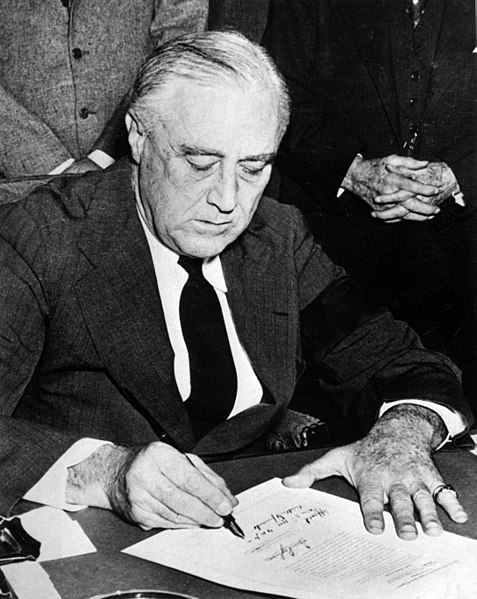
Harris turned toward me and raised an eyebrow. "I've helped many people. And now the United States needs my help. I've thought and thought about writing a letter to President Roosevelt. I'd like to write to him, I know he'd never get to see it. There are so many people there to read his letters that he never would get mine."
"What would you like to tell President Roosevelt?" I asked.
"Lady, I'd tell him to beware. Something terrible is going to happen in America by the first of May. Our country will either go to war or our president will be killed. I don't know which; it may be both."
"What makes you so certain, Professor Harris?"
"The stars and the moon. The last time the moon was in that position was in April 1917 when America declared war on Germany. Woodrow Wilson was not assassinated, but his career was ruined, his health was wrecked and an assassination would have been easier for him. Lincoln, Garfield and McKinley were all assassinated under the same sign. Either Roosevelt or Mussolini will be killed. Maybe both. I'd like to warn him, but my hands are tied."
A rap sounded on the door and a little boy stuck his head into the room. "Daddy, Mama says for you to come right on to dinner 'cause it's getting cold." With this hint, I decided to take my leave, thanking the "professor" for a most interesting morning.
Nothing catastrophic happened to Franklin Roosevelt between January and May 1939. He died April 12,1945 and Benito Mussolini was assassinated a few weeks later. The war that was already brewing in Europe would not begin until September of 1939 and the United States would not enter that war until December of 1941.
The skeptic -- and I will admit that I lean in that direction -- might say that "Professor" Harris is a fraud. Others may wonder if he actually did write that letter to Roosevelt? And perhaps the President read it, and with that bit of forewarning, managed to evade his potential assassin and steer the country clear of war?
I guess we'll never know.
Learn more about the Federal Writer's Project:
- Rose, Annie. Interview with Prof. W. L. Harris (white) Macon, GA. University of North Carolina Libraries. Federal Writers' Project Papers, 1939-1940.
- Library of Congress. American Life Histories: Manuscripts from the Federal Writers' Project, 1936-1940.
- Smithsonian Channel. The Soul of a People: Writing America's Story.
Photo Credits:
- "Hunt for Missing Girl Continues." Augusta (GA) Chronicle. January 12, 1939.
- "Missing Macon Girl Said in Asheville." Augusta (GA) Chronicle. January 13, 1939.
- Rowe. Abbie. Photograph of President Franklin D. Roosevelt Signing the Declaration of War Against Japan, 12/08/1941. Library of Congress. 1939.


No comments:
Post a Comment